
USDT on TRC20 vs ERC20: fees, speed, and when each matters
TRC20 and ERC20 are two networks carrying the same USDT token. TRC20 (TRON) is cheaper and faster to credit, which is why most USDT settlement in the UAE runs on it; ERC20 (Ethereum) costs more but sits inside the deepest DeFi ecosystem. Your desk trade settles the same day on either.
KEY FACTS
| The token | The same Tether-issued USDT on both networks |
|---|---|
| TRC20 transfer fee | ≈US$1–7, stable |
| ERC20 transfer fee | ≈US$0.50–15+, floats with congestion |
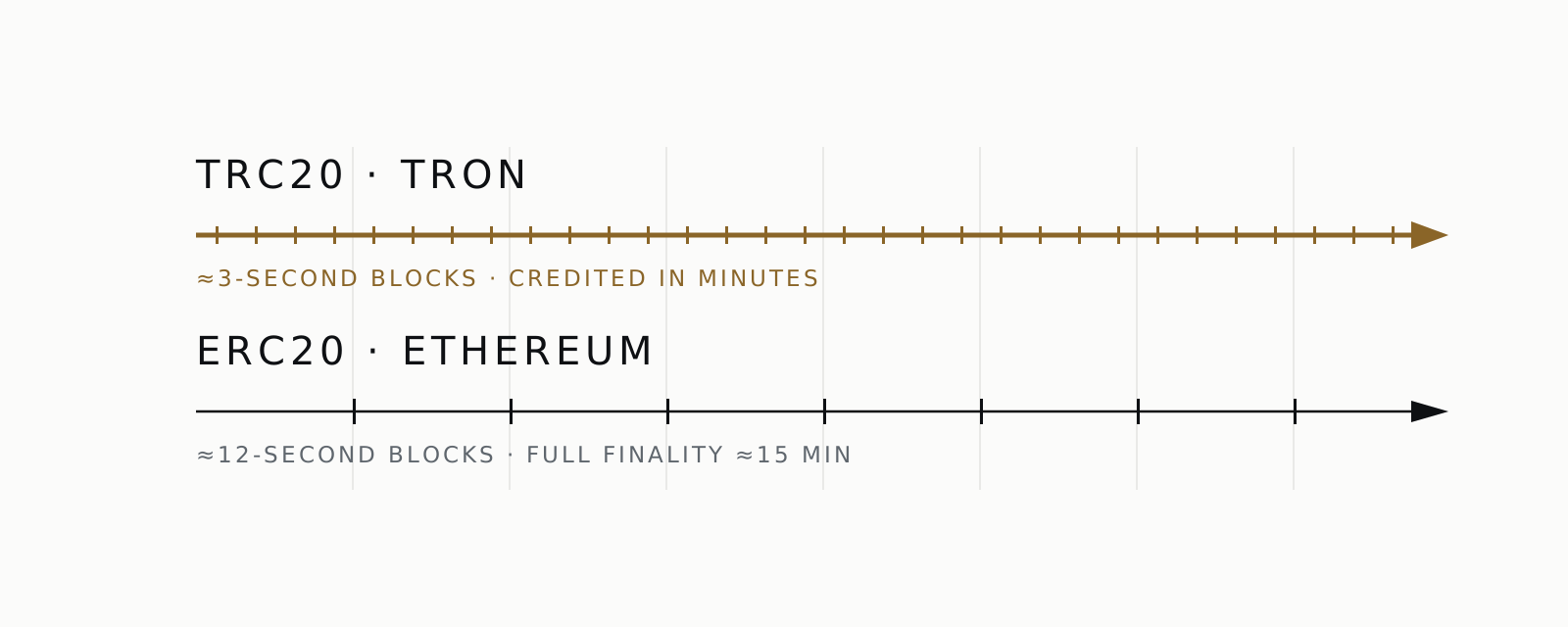
| Block interval | ≈3 seconds (TRON) vs ≈12 seconds (Ethereum) |
| Full transaction finality | ≈1 minute (TRON) vs ≈15 minutes (Ethereum) |
| At Meridian OTC | Both accepted; AED settles the same business day either way |
Source: Tether, TRON and Ethereum protocol documentation and live network trackers, as of September 2026.
What are TRC20 and ERC20?
TRC20 and ERC20 are token standards on two different blockchains: TRON and Ethereum. Tether issues USDT on both networks, and one USDT holds the same one-dollar value on either. What changes between them is the rail you move the token on — its fee, its speed, and who accepts it.
The two networks together carry the large majority of all USDT in circulation, according to Tether's published supply figures (as of September 2026). When you sell USDT in Dubai through a licensed desk, the network choice affects only the transfer leg: how fast your tokens arrive and what you pay to send them. The rate, the spread and the bank settlement are identical on both.
How much does a USDT transfer cost on each network?
A USDT transfer on TRC20 costs roughly US$1–7 in network fees, as of September 2026, and the price stays stable. The same transfer on ERC20 runs from under US$1 in quiet hours to US$15 or more when Ethereum is congested. TRC20 fees are flat; ERC20 fees float with demand for block space.
The mechanics differ. TRON charges in energy and bandwidth: a wallet without enough rented energy burns TRX per transfer — since TRON cut the energy price from 210 to 100 sun in August 2025, roughly 6.5 TRX to an address that already holds USDT and about 13.5 TRX to one that does not. Ethereum charges gas, priced per unit and auctioned block by block, so the identical USDT transfer can cost fifty cents on a quiet Sunday and ten dollars during a market sell-off.
At desk size the network fee is noise either way. On a 250,000 USDT settlement, a 0.08% spread costs 200 USDT, while the network fee is single-digit dollars on both chains. The fee gap decides everyday remittances; for a large OTC trade it decides almost nothing, because our published spread bands dwarf it.
| Attribute | TRC20 (TRON) | ERC20 (Ethereum) |
|---|---|---|
| Typical transfer fee | ≈US$1–7, stable | ≈US$0.50–15+, congestion-driven |
| Block interval | ≈3 seconds | ≈12 seconds |
| Typical credit time at venues | A few minutes | Minutes to half an hour |
| Full transaction finality | ≈1 minute | ≈15 minutes |
| Best suited for | Settlement, remittance, exchange transfers | DeFi, smart contracts, Ethereum custody |
TRC20 wins on cost and predictability; ERC20's case is ecosystem access, not price.
How fast is each network, really?
TRON produces a block about every 3 seconds, and a TRC20 transfer is typically credited within minutes. Ethereum produces a block every 12 seconds, but full finality — the point where reversal stops being practical — takes around 15 minutes. Both are fast enough for commerce; the difference is how quickly your money becomes irreversible.
Speed matters more to the desk than to you. A licensed desk releases the AED wire only once your USDT deposit is confirmed beyond dispute, because the bank leg cannot be pulled back. A faster-crediting network means the clock on same-day settlement starts earlier.
In practice both networks clear inside a normal trading window. The delays that actually break same-day settlement sit on the banking side or in account approval, not in either chain.
Why does TRC20 dominate USDT transfers in the UAE?
TRC20 dominates USDT settlement in the UAE because it is cheap, fast and predictable — the three properties a settlement rail needs. Retail senders in Gulf–Asia corridors adopted TRON first, and the desks and exchanges followed where the liquidity already sat.
- Fees stay in single-digit dollars regardless of network load, so pricing a transfer never needs a guess.
- Three-second blocks mean venues credit deposits in minutes, not half an hour.
- Regional counterparties default to TRC20, so receiving wallets are already set up for it.
The pattern shows up in order flow: most inbound USDT at our desk arrives on TRC20, and most clients ask for it by default — exchange withdrawals included: the Bybit-to-UAE-bank route whitelists the desk's address and withdraws on-chain. Not from brand loyalty — because every counterparty they settle with uses the same rail, and network effects do the rest.
TRC20 dominance changes none of the pricing. Your trade still anchors to the dollar peg: the USDT/AED rate sits on the 3.6725 fix whichever network carries the tokens. The network is a delivery mechanism, not a pricing input.
When does ERC20 still make sense?
ERC20 makes sense when your USDT already lives inside the Ethereum ecosystem: posted as DeFi collateral, locked in smart contracts, or held with a custodian that whitelists Ethereum addresses only. Moving such funds to TRC20 first means a swap or a bridge, with its own fees and risks.
Ethereum also remains the deeper venue for on-chain activity, and some institutional platforms settle on ERC20 by policy. If your counterparty specifies ERC20 in writing, sending TRC20 to save five dollars in fees is the wrong kind of thrift.
Bridges deserve a specific warning. A bridge is a smart contract holding real money, and bridge exploits have historically been among the largest losses in the sector. If you need USDT on another network, routing through a regulated exchange or your desk is the duller and safer path.
What should you check before sending USDT?
Check three things before any large USDT transfer: the network named in your written quote, the address format, and a small test send to any new address. A wrong-network transfer is the most common unforced error in OTC settlement, and it is entirely avoidable.
-
STEP 1
Confirm the network in writing
The quote states TRC20 or ERC20; send exactly that. A desk credits only the network it quoted, and "I assumed ERC20" is not a recoverable assumption.
-
STEP 2
Check the address format
TRC20 addresses start with "T", ERC20 addresses with "0x". A 0x address attached to a TRC20 quote is a stop sign — query it before anything moves.
-
STEP 3
Send a test amount to a new address
A few dollars on the agreed network costs almost nothing and proves the route end to end. Skip this only for an address you have settled to before.
-
STEP 4
Send the full amount and share the hash
The desk tracks the transaction from the hash you provide; once it confirms, AED goes out by UAEFTS the same business day. If your account is not yet approved, handle account approval first — it takes one business day.
The bottom line on TRC20 vs ERC20
For OTC settlement in the UAE, use TRC20 unless your funds are locked in Ethereum: it is cheaper, faster to credit, and it is the rail most counterparties already run. ERC20 remains the right choice inside the Ethereum ecosystem. Either way, the desk trade itself — the price, the spread, the same-day AED wire — is unchanged.
FAQ
Is TRC20 or ERC20 safer for a large USDT transfer?
Neither is unsafe for the transfer itself; both move the same Tether-issued token. The practical risk is operational: sending on a network your recipient did not confirm. Confirm the network in writing and test a small amount first.
What happens if I send USDT on the wrong network?
The tokens do not appear where you expected. If the recipient controls the same address on that network, recovery is possible; if not, the funds can be lost permanently. Tell the desk immediately — recovery is sometimes possible, never guaranteed.
Who pays the network fee in an OTC trade?
You do, from your wallet, when you send. Network fees are paid to the blockchain, not to the desk; the desk's spread covers pricing and settlement. On a 250,000 USDT trade the network fee is typically under US$15 on either chain.
Which network do UAE desks and exchanges prefer?
TRC20, because fees are low and predictable and most regional counterparties already use it. Licensed desks, including ours, accept both — the network affects only the transfer leg, not your rate or your settlement time.
Settle USDT the same business day, on either network
Meridian OTC is a VARA-licensed Broker-Dealer in Dubai. Send TRC20 or ERC20 — your written quote is all-in, spread 0.08–0.40% by size, and AED reaches your own bank account the same business day by UAEFTS.
SOURCES
- Tether — transparency (USDT supply by chain), accessed 10 September 2026.
- ethereum.org — gas and transaction fees, accessed 10 September 2026.
- Tronscan — TRON blocks, energy and transfer fees, accessed 10 September 2026.
- Meridian OTC published pricing bands and onboarding requirements — Meridian OTC published pricing bands, September 2026.
- Tronscan — TRON Proposal #104 — energy unit price reduced from 210 to 100 sun, 29 August 2025, accessed 14 September 2026.
This guide is informational and is not legal, tax or investment advice, nor an invitation to buy or sell any virtual asset. Rules and figures are as of September 2026 — re-check the sources before acting. Virtual assets may lose their value in full or in part and are subject to extreme volatility.