
Named dealer vs support ticket: service models in OTC
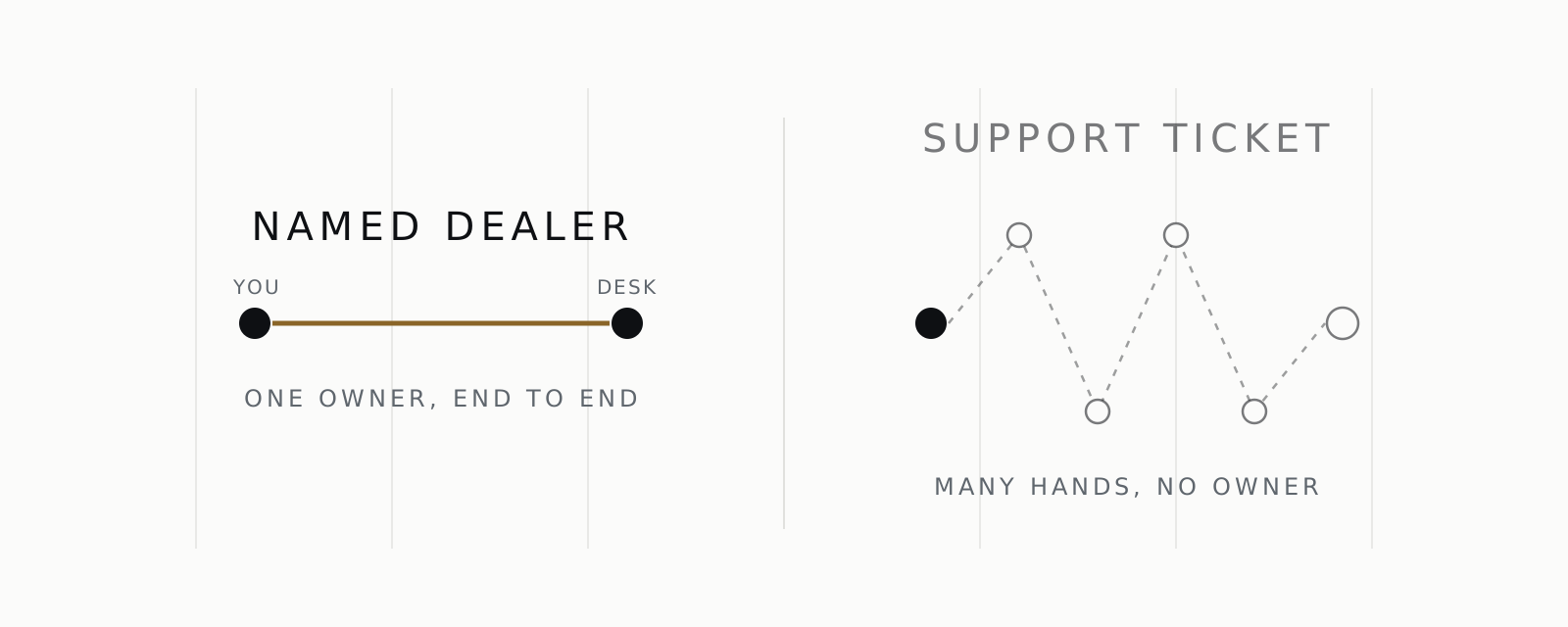
A named dealer means one identified person owns your trade from quote to settlement and answers for it in writing. A support-ticket model routes the same trade through a queue with no single owner. On a six-figure ticket the difference shows up in price certainty, speed and the paper trail your bank may later ask for.
KEY FACTS
| The two service models | Named dealer vs support-ticket queue |
|---|---|
| Meridian OTC model | A named dealer per account, end to end |
| Quote standard | Written, all-in, held for a defined window |
| Dealing hours | Sunday–Thursday, 09:00–18:00 GST |
| Licence | VARA Broker-Dealer VL/24/03/017 |
Source: Meridian OTC dealing practice and licence record, as of September 2026.
What is the difference between a named dealer and a support ticket?
A named dealer is a service model in which one identified trader owns your order from quote to settlement. A support-ticket model treats the same order as a request in a queue: whoever is on shift replies, and no single person owns the outcome. The distinction sits underneath everything else in how an OTC desk executes a trade.
The queue model comes from retail customer support, where it works well. A password reset or a card query is the same problem every time, so routing it to the next free agent costs nothing. A large trade is not the same problem every time: size, rail, settlement account and market conditions all change the answer.
The named-dealer model comes from institutional broking. Your dealer knows your usual size, your settlement account and your source-of-funds file, because all of it was set up once during onboarding. A queue re-reads that context from scratch on every ticket.
| Aspect | Named dealer | Support-ticket queue |
|---|---|---|
| Owner of the trade | One named person, quote to settlement | Whoever picks up the ticket |
| Quote | Written, all-in, held for a defined window | Often indicative, confirmed later |
| Context on your file | Retained by the dealer | Re-explained each contact |
| Dispute resolution | One dealing log, one accountable owner | Reconstructed across shifts |
On a small retail ticket the models are hard to tell apart; on a seven-figure conversion the queue's missing owner is where delays and disputes start.
Who is accountable when something goes wrong?
With a named dealer, accountability is personal: the person who quoted the price is the person who confirmed the fill and booked the settlement. In a ticket queue, accountability is diffused across shifts and systems, and a dispute becomes an exercise in reconstructing who said what and when.
This matters in the two places OTC trades actually fail. The first is a settlement that does not arrive when expected; the second is a price disagreement after a fast market. A named owner answers both from one dealing log, while a queue answers both with a case number.
Licensed firms in Dubai must keep records of client orders and transactions under the VARA rulebooks, so a regulated desk has the log either way. The service model decides how quickly a client gets an answer out of that log, not whether the log exists.
What written record should an OTC trade leave?
A properly run OTC trade leaves three written records: an accepted quote with an all-in price and a validity window, a trade confirmation carrying the on-chain transaction ID, and a bank settlement reference — UAEFTS for AED, SWIFT for USD. If any of the three is missing, the trade has a hole in its trail.
The quote is the record clients most often underestimate. A desk that quotes by voice and confirms "in a moment" has shifted the price risk to you for the length of that call. Read how a quote window works before your first ticket, and treat a refusal to write the number down as an answer in itself.
Keep the full trail, because the trail is what your bank asks for when a large inbound transfer is reviewed:
- The accepted quote, with price, size, network and timestamp.
- The trade confirmation, with the on-chain transaction ID.
- The settlement reference — UAEFTS or SWIFT — for the bank wire.
- Your onboarding and source-of-funds file, kept current.
Does the service model change execution speed?
Yes — on a live order a named dealer answers within the hour during dealing time (Sunday to Thursday, 09:00–18:00 GST), because the person reading your message is the person who can price the trade. A queue adds a routing step, and in a moving market routing time is price.
The queue's cost is not only minutes. It is the handoff at shift change, the re-explanation of size and rail, and the approval chain for anything above a routine amount. Each handoff is a point where the answer can quietly change.
None of this is billed as a separate service. The named dealer is built into the spread — ours is 0.08% to 0.40% by ticket size, published in the pricing section as of September 2026 — so the comparison between desks should be on the all-in number, never on the service label.
What should you ask a desk about its service model?
Ask six questions before the first trade: who owns the trade, whether the quote comes in writing, how long the quote is held, the response time during dealing hours, what confirmations you receive, and who covers when your dealer is away. A serious desk answers all six in one message.
- "Will a named person own my trade from quote to settlement?" — anything but a name is a queue.
- "Do you put the all-in quote in writing, and for how long is it held?"
- "What is your response time on a live order during dealing hours?"
- "What do I receive after the trade, and after settlement?" — you want a confirmation and a bank reference.
- "Who quotes when my dealer is off, and can they see my file?"
- "What is your licence number?" — then check it in the VARA register; ours is VL/24/03/017.
A desk that cannot say who owns your trade has already told you the answer. The service model is not a preference question; it decides whether your written trail and your escalation path exist before you need them.
The bottom line on service models
A named dealer and a support ticket are two different answers to the same question: who is responsible for your money between quote and settlement. At 100,000 USDT and above, the answer should be a person you can name, with the price and the window in writing before you send anything.
Choose the desk the way you would choose a bank: licence first, written record second, named owner third. Speed and price follow from those three, not the other way round.
FAQ
Is a named dealer the same as an account manager?
No. An account manager handles onboarding, paperwork and general queries. A dealer prices and executes your trades and owns the outcome from quote to settlement. Some desks combine the roles; what matters is that one named person is accountable for the trade itself.
Can I get a written quote before I commit?
Yes, and you should insist on it. A serious OTC desk sends an all-in price in writing, held for a defined window, before you send anything. A provider that quotes by voice and confirms later has moved the price risk to you for the length of the call.
Does a named dealer cost extra?
At OTC size the service is built into the spread, not billed as a separate fee. Meridian OTC publishes an all-in spread of 0.08% to 0.40% by ticket size, as of September 2026, and every account trades through a named dealer.
What happens if my dealer is unavailable?
A named dealer means a named owner of your trade, not a single point of failure. A properly run desk has a second dealer who sees your file and can quote when the first is away. Ask about coverage when you open the account.
Trade with a named dealer
Meridian OTC is a VARA-licensed Broker-Dealer in Dubai. Every account trades through a named dealer, every quote is written and all-in, and AED settles by UAEFTS the same business day once your account is approved.
SOURCES
- VARA public register — licence status check, accessed 10 September 2026.
- VARA Rulebooks — record-keeping and client-order obligations for licensed Broker-Dealers, accessed 10 September 2026.
- Meridian OTC published pricing bands, dealing hours and onboarding requirements — this site, September 2026.
This guide is informational and is not legal, tax or investment advice, nor an invitation to buy or sell any virtual asset. Rules and figures are as of September 2026 — re-check the sources before acting. Virtual assets may lose their value in full or in part and are subject to extreme volatility.