
Crypto to escrow: how RERA-registered settlements work with USDT
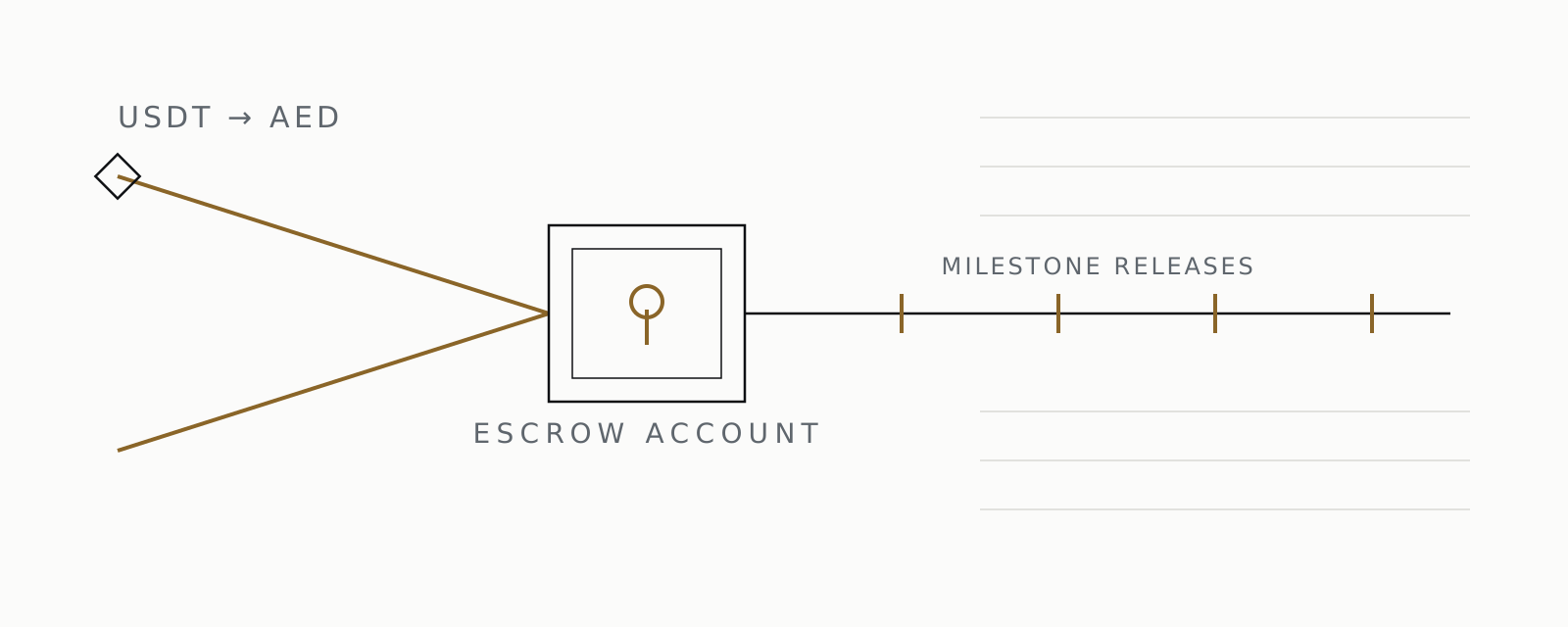
A RERA-registered escrow account cannot receive USDT — it is an AED bank account. The compliant route: convert your USDT at a VARA-licensed desk, receive dirhams in your own bank account the same business day, and wire the instalment to the project's trust account yourself.
KEY FACTS
| Escrow regulator | RERA, under the Dubai Land Department (DLD) |
|---|---|
| Legal basis | Dubai Law No. 8 of 2007 (off-plan escrow accounts) |
| Applies to | Off-plan sales; ready property settles via DLD trustee offices |
| Escrow currency | AED bank wire only — no crypto accepted |
| Conversion cost at Meridian | 0.08%–0.40% all-in spread, by ticket size |
| AED settlement | Same business day (UAEFTS), own-name account only |
Source: Dubai Law No. 8 of 2007 and Meridian OTC published pricing bands, as of September 2026.
Can a RERA escrow account accept USDT directly?
No — a RERA-registered trust account cannot accept USDT or any other crypto. These accounts are AED accounts at banks approved for each project, and as of September 2026 no escrow arrangement in Dubai takes crypto. Your USDT must first become dirhams through a licensed provider — the same conversion covered in our guide to cashing out crypto in Dubai legally — and only then enter escrow by bank transfer.
This is plumbing, not developer preference. An escrow agent reconciles every incoming wire against a milestone schedule for a named unit, and an on-chain transfer has no account name or reference field to post against.
How does a RERA-registered escrow account work?
Under Dubai Law No. 8 of 2007, a developer selling off-plan must register the project with the Dubai Land Department and open a dedicated escrow — officially "trust" — account for it. All buyer instalments go into that account, never to the developer directly.
Money leaves the account only against construction progress: a RERA-approved engineering consultant certifies a milestone and the escrow agent releases the matching tranche. After completion, 5% of the account's value is held back for one year against defects, under the same law.
The rule covers off-plan sales only. A ready property changes hands at a DLD trustee office against manager's cheques, so the crypto question there sits one step earlier — in your own bank account, before the appointment.
How do you go from USDT to a funded escrow, step by step?
Moving from USDT to a funded RERA escrow takes five moves: open the desk account, sign the sale and purchase agreement (SPA), register the sale, convert before each milestone, and wire the dirhams yourself. With an approved account, the last two compress into one business day.
-
STEP 1
Open the desk account before the first instalment
You register once: passport and proof of address for an individual, licence and ownership documents for a company buyer. Approval takes one business day in most cases — the full list is in our onboarding section. Doing this before the SPA is signed is the single biggest speed-up available.
-
STEP 2
Sign the SPA and read the milestone schedule
The SPA states the price, the instalment amounts and due dates, and the project's escrow account details. Every figure you will later wire is defined here — keep a copy with the payment schedule highlighted.
-
STEP 3
Register the sale on Oqood
DLD's Oqood portal registers the off-plan sale and ties the unit to your name. The standard 4% DLD registration fee applies at purchase, as of September 2026. Registration is what lets the escrow agent recognise your wires.
-
STEP 4
Convert the USDT ahead of each milestone
You accept a written quote for the amount you need, send USDT on the agreed network, and AED goes out by UAEFTS the same business day you trade. TRC20 is the common, cheapest rail for USDT in the UAE.
-
STEP 5
Wire AED from your own account to the trust account
The wire goes from your own-name account to the escrow account named in the SPA, referencing the unit and project. Keep the bank's confirmation — it is the last link in your document chain.
When should you convert USDT before a milestone?
Convert one to two business days before each milestone falls due. Once your account is approved, the desk settles AED the same business day you trade, so the margin exists for the onward bank wire to escrow — not for the desk.
Worked example, as of September 2026: an instalment of AED 2,000,000 falls due on 20 October. You sell 550,000 USDT on 18 October at a 0.15% spread — within our published spread bands for that size — receive roughly AED 2,017,000 the same day, and wire the AED 2,000,000 to the trust account. The spread costs about AED 3,000.
USD settlement does not apply here, because escrow accounts take dirhams. If your bank holds the outgoing wire for a routine review, the buffer you built in step one absorbs it.
What documents connect the crypto leg to the escrow leg?
The document chain for a crypto-funded off-plan purchase has five documents: the SPA, the Oqood registration, the desk's trade confirmation, the bank credit advice, and the wire confirmation into escrow. Each names you, and each answers a specific question a bank or developer may ask later.
| Document | Issued by | What it proves | Keep it because |
|---|---|---|---|
| Sale and purchase agreement (SPA) | Developer | Price, unit and milestone schedule | Defines the amounts the escrow expects |
| Oqood registration | Dubai Land Department | The off-plan sale is registered to you | Ties your name to the unit and trust account |
| Trade confirmation | VARA-licensed desk | USDT converted at an agreed written price | First link in the source-of-funds chain |
| Bank credit advice (AED) | Your bank | Funds arrived from the desk in your name | Shows own-name settlement |
| Wire confirmation to escrow | Your bank | Instalment paid to the project trust account | Reconciles you to the milestone |
The chain reads in one direction: one name, one trail, from wallet to trust account — a gap anywhere in it is a question later.
Why does the wire have to come from your own account?
Escrow agents post incoming wires against a named buyer and unit, so money arriving from a third party is commonly returned or held pending review. A licensed desk pays only to an account in your own name — which is exactly the trail the escrow agent and your bank want to see.
If a bank or the developer's compliance team later asks where the instalment came from, the answer is the chain above. Our guide on what banks ask about crypto source of funds lists the standard documents in that review.
What are the red flags in a crypto-funded property deal?
The red flags when funding a Dubai property purchase from crypto are, in descending order of importance:
- A developer or broker offering to take your USDT directly, with no VARA-licensed provider in the loop.
- An "escrow account" in a personal name, or payment instructions that arrive by messenger and change mid-deal.
- A desk offering to wire the developer's escrow from its own pooled account — that severs your name from the money.
- Pressure to skip Oqood registration "to save time". Registration is what ties the unit to you.
- A conversion rate better than the 3.6725 peg with no spread stated in writing. Better-than-peg means the cost is hidden somewhere you cannot see it.
The bottom line on paying RERA escrow with USDT
RERA escrow and crypto never touch: the trust account speaks AED bank wire only, so the conversion happens one step earlier, at a licensed desk, into your own account. Open the account before the first milestone, convert a day or two ahead of each due date, and keep the five documents that join the two halves of the deal.
For the other side of the same transaction, read how Dubai developers accept crypto through licensed providers.
FAQ
Can a developer's escrow account receive USDT directly?
No. RERA-registered trust accounts are AED accounts at approved banks, and as of September 2026 no escrow arrangement accepts crypto. You convert first at a licensed desk, then wire the dirhams yourself.
Do escrow rules apply to ready property, or only off-plan?
Only off-plan. Law No. 8 of 2007 covers off-plan developments; ready property changes hands at a Dubai Land Department trustee office, normally against manager's cheques, as of September 2026.
What records should I keep from the crypto side of the payment?
Keep the desk's written quote and trade confirmation, the on-chain transaction hash, and the bank credit advice showing AED arriving in your own account. Together they form your source-of-funds trail.
How early should I sell the USDT before a milestone?
Open the desk account well before the first instalment; approval takes about one business day. Once approved, conversion settles AED the same business day, so one or two days of margin is enough.
Fund your next milestone from USDT
Meridian OTC is a VARA-licensed Broker-Dealer in Dubai. All-in spread 0.08–0.40% by size, AED in your own account the same business day — ready for the escrow wire.
SOURCES
- Dubai Law No. (8) of 2007 concerning escrow accounts for real estate development — Dubai Legal Portal, accessed 10 September 2026.
- Dubai Land Department — trust accounts and Oqood registration, accessed 10 September 2026.
- VARA public register — licence status check, accessed 10 September 2026.
- Meridian OTC published pricing bands and onboarding requirements — Meridian OTC published pricing bands, September 2026.
This guide is informational and is not legal, tax or investment advice, nor an invitation to buy or sell any virtual asset. Rules and figures are as of September 2026 — re-check the sources before acting. Virtual assets may lose their value in full or in part and are subject to extreme volatility.