
What is a broker-dealer?
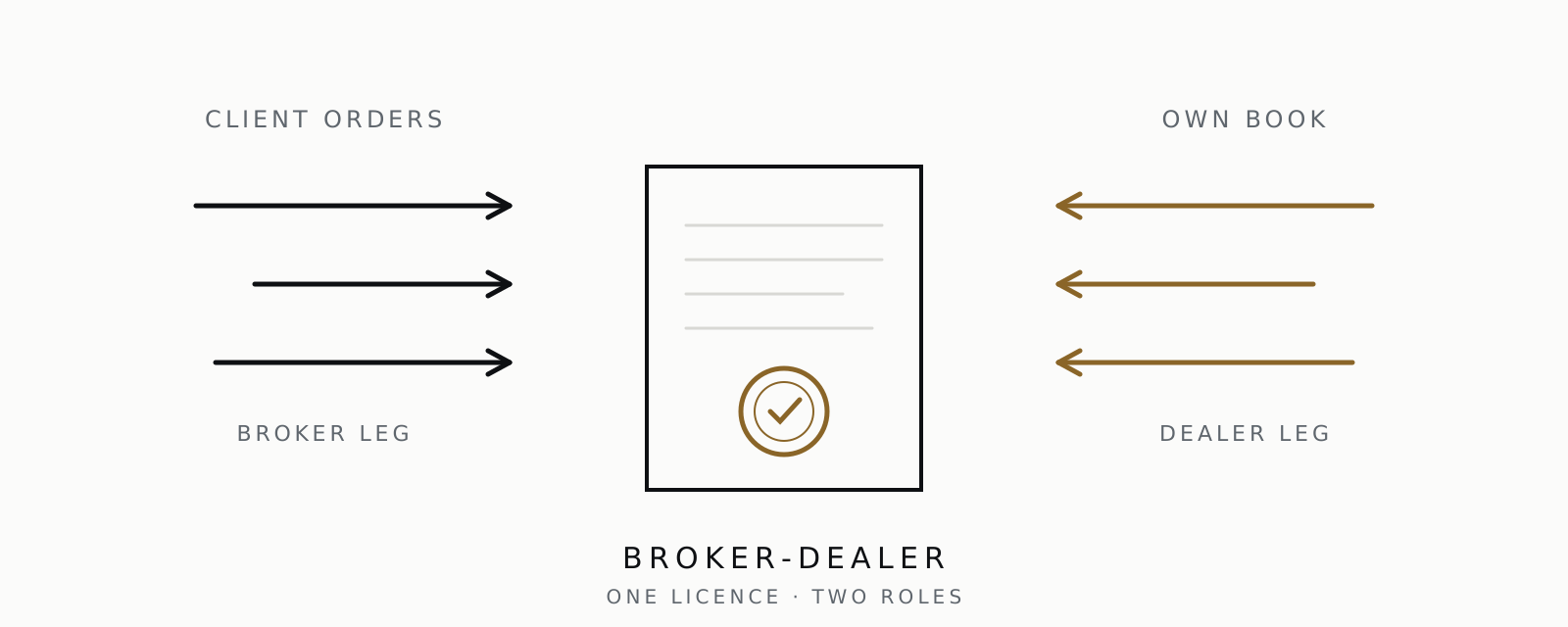
A broker-dealer is a firm that buys and sells assets in two roles: as a broker it executes client orders, and as a dealer it trades for its own account as principal. In Dubai, offering these services in virtual assets is a regulated activity requiring a VARA Broker-Dealer licence.
KEY FACTS
| The two roles | Broker (executes client orders) + dealer (trades as principal) |
|---|---|
| Regulator in Dubai | VARA (outside the DIFC) |
| VARA licensed activity | Broker-Dealer Services |
| Meridian OTC licence | VL/24/03/017 (Broker-Dealer) |
| Meridian spread | 0.08%–0.40%, by ticket size |
| Settlement | AED same business day (UAEFTS); USD 2–5 days (SWIFT) |
Source: VARA Virtual Assets and Related Activities Regulations 2023 and Meridian OTC published pricing bands, as of September 2026.
What does a broker-dealer do?
A broker-dealer performs two functions under one roof. As a broker it arranges or executes orders on a client's behalf; as a dealer it buys and sells for its own account, quoting a price from its own book. Most crypto desks operate in the dealer role.
Under VARA's Regulations (Schedule 1), Broker-Dealer Services covers arranging orders between two parties, soliciting or accepting orders and taking payment for them, facilitating the matching of buyers and sellers, dealing as principal or on behalf of clients, market making, and placement or distribution for token issuers. Meridian OTC holds this activity under licence VL/24/03/017, verifiable from the licence section of our main page.
The practical reading is simple: the licence is what lets a firm legally quote you a price for your crypto and stand on the other side of the trade. Without it, the same activity is unlicensed dealing, whatever the marketing calls it.
How is a broker-dealer licensed in the UAE?
In Dubai (outside the DIFC financial free zone), the Virtual Assets Regulatory Authority licenses Broker-Dealer Services as a distinct activity, sitting alongside Exchange, Custody, Advisory, Lending and Borrowing, Management and Investment, and Transfer and Settlement. Each activity is licensed individually: a Broker-Dealer licence does not by itself permit operating an exchange or holding client assets in custody.
Jurisdiction matters. The DIFC has its own regulator (the DFSA) and Abu Dhabi's ADGM has the FSRA; a VARA licence covers Dubai outside those financial free zones. Before sending anything, run the desk's licence number through VARA's public register — the full check takes one minute and we walk through it in our VARA licence verification guide.
Why does the broker-dealer model matter when selling USDT?
When you sell USDT to a broker-dealer, you trade with the dealer leg: the desk quotes you one price as principal, and the quoted price is the fill. There is no order book to walk and no partial fills — the trade is bilateral, documented and settled to a bank account in your own name.
That structure is what an OTC desk is in regulatory terms: a broker-dealer trading over the counter rather than on a public exchange. The cost of the trade is the spread; ours runs 0.08% to 0.40% by ticket size and is published in the pricing section, as of September 2026.
The second benefit is the paper trail. Settlement arrives as a wire from a licensed, named entity (see what an LEI code identifies), which is the version of events a UAE bank wants to see when a large conversion lands in your account.
Example: selling 750,000 USDT through a broker-dealer
A client sells 750,000 USDT in September 2026. The desk, acting as dealer, quotes the peg minus a 0.18% spread in writing: gross 750,000 × 3.6725 = AED 2,754,375, cost AED 4,958, net AED 2,749,417 wired by UAEFTS the same business day.
The quote is one fixed number held for a defined window, so the client knows the exact dirham amount before sending a single USDT. The full sequence — account approval, quote, transfer, wire — is laid out step by step in how to sell USDT in Dubai.
FAQ
Is a broker-dealer the same as an OTC desk?
In crypto terms, yes: a licensed OTC desk operates under a Broker-Dealer licence, trading as principal off the public order book. OTC describes where the trade happens; broker-dealer is the legal activity behind it.
Can a broker-dealer hold my crypto for me?
Not under a Broker-Dealer licence alone: safekeeping client assets is Custody, a separate VARA activity. A pure broker-dealer settles each trade — you send the USDT, the desk wires dirhams to your own bank account.
Is a broker-dealer licence the same as an exchange licence?
No. Exchange Services means operating a facility that matches third-party orders; Broker-Dealer Services means dealing as principal or arranging client orders. They are separate VARA activities, licensed individually.
How do I check that a Dubai broker-dealer is licensed?
Ask for the licence number and search VARA's public register on vara.ae; the entry must name Broker-Dealer Services among the licensed activities. Meridian OTC's licence is VL/24/03/017.
Sell USDT through a licensed broker-dealer
Meridian OTC is a VARA-licensed Broker-Dealer in Dubai (VL/24/03/017). All-in spread 0.08–0.40% by size, published openly. AED by UAEFTS the same business day once your account is approved.
SOURCES
- VARA — Virtual Assets and Related Activities Regulations 2023 and activity rulebooks (Schedule 1: Broker-Dealer Services), accessed 11 September 2026.
- VARA public register — licence status check, accessed 11 September 2026.
- Meridian OTC published pricing bands — Meridian OTC published pricing bands, September 2026.
This guide is informational and is not legal, tax or investment advice, nor an invitation to buy or sell any virtual asset. Rules and figures are as of September 2026 — re-check the sources before acting. Virtual assets may lose their value in full or in part and are subject to extreme volatility.