
AED vs USD settlement: which currency should you choose?
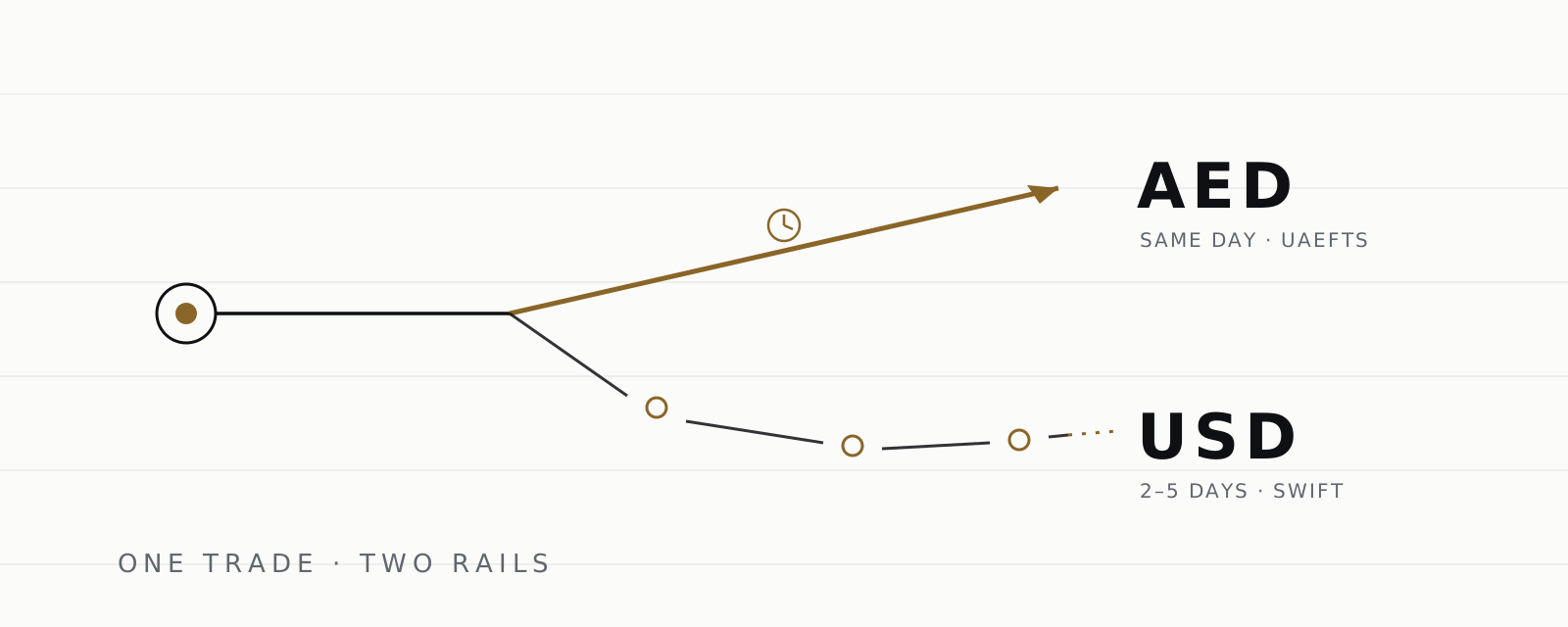
Settle in AED when the money stays in the UAE: it arrives the same business day by UAEFTS. Choose USD when you pay obligations in dollars abroad or hold dollar balances: it travels by SWIFT and takes two to five business days. The 3.6725 peg means the choice is about rails, not exchange risk.
KEY FACTS
| AED rail | UAEFTS — same business day |
|---|---|
| USD rail | SWIFT — 2–5 business days |
| AED/USD peg | 3.6725, fixed since 1997 |
| Meridian spread | 0.08%–0.40% by ticket size, either currency |
| Desk minimum | From around 100,000 USDT |
| Settlement account | Own-name accounts only |
Source: Central Bank of the UAE and Meridian OTC published settlement terms, as of September 2026.
What is the difference between AED and USD settlement?
AED settlement is a domestic transfer through UAEFTS, the real-time gross settlement system run by the Central Bank of the UAE, and it lands the same business day. USD settlement is an international wire over SWIFT and takes two to five business days. The desk quote and the spread are identical for both.
UAEFTS moves dirhams directly between UAE banks with no intermediaries — the mechanics are in our UAEFTS explainer. A USD wire passes through a chain of correspondent banks before it reaches yours, and each hop can add a day and a deduction.
What does not differ is the rate. The dirham has been pegged to the US dollar at 3.6725 since 1997, so at the moment of the trade an AED outcome and a USD outcome are arithmetically the same. The decision is about rails and end use, not about picking a better exchange rate.
When should you settle in AED?
Settle in AED when the money will be spent in the UAE: property purchases, local suppliers, payroll, rent and living costs all run in dirhams. An AED wire goes out by UAEFTS the same business day you trade, and the settlement is final once it lands.
A property completion is the cleanest case. You sell 800,000 USDT in the morning, the desk wires AED the same afternoon, and the escrow top-up is funded before the trustee office closes. Converting to dollars and back for local spending would add a bank FX margin for no reason.
The one constraint is the bank cut-off, typically mid-afternoon GST. Trade before the cut-off and the money lands the same day; trade after it and the wire goes first thing the next business morning.
When should you settle in USD?
Settle in USD when the obligation is denominated in dollars and sits outside the UAE: international suppliers, foreign tuition, or a treasury balance you hold in dollars. Paying in USD directly avoids converting dirhams back to dollars later at your bank's retail FX margin.
USD leaves the desk by SWIFT and travels a correspondent chain — the full route, with timelines and fee instructions, is covered in our guide to SWIFT transfers from the UAE. Intermediaries commonly deduct USD 15–50 each, and US market holidays pause the chain even on a working day in Dubai.
Ask your bank first whether it offers foreign-currency accounts and what it charges on incoming wires. Most large UAE banks do, but the receiving charge is the one cost in the USD leg that nobody quotes you upfront.
What does AED vs USD settlement cost?
The currency does not change the desk's price. The Meridian spread is 0.08%–0.40% by ticket size — 0.40% at 100,000 USDT, 0.25% at 500,000, 0.15% at 2 million and 0.08% at 10 million — published openly in our pricing bands and applied identically whether you settle in AED or USD.
On a 500,000 USDT ticket the 0.25% band costs USD 1,250 — about AED 4,590 at the peg. Settle in AED and that is the whole cost; settle in USD and the correspondent chain may deduct further amounts on top, before your receiving bank's charge.
| Cost item | AED (UAEFTS) | USD (SWIFT) |
|---|---|---|
| Desk spread | 0.08% – 0.40% by size | 0.08% – 0.40% by size |
| Intermediary deductions | None — no intermediaries | Commonly USD 15–50 per correspondent |
| Receiving-bank charge | Local credit — check your tariff | Varies by bank — check first |
| Time to money | Same business day | 2–5 business days |
The spread is a wash; AED wins on the rail because nothing touches the money between the desk and your account.
Which scenarios call for which currency?
Most sellers fit one of five cases. The rule underneath all of them: settle in the currency you will actually spend, because every conversion you skip is a margin you keep.
| Scenario | Settle in | Why |
|---|---|---|
| Property or escrow payment in Dubai | AED | Same-day UAEFTS meets completion deadlines |
| Supplier invoice in dollars abroad | USD | One conversion, no double FX margin |
| Payroll and local running costs | AED | WPS and local vendors run on dirhams |
| Dollar treasury buffer | USD | Hold dollars without a re-conversion cost |
| Mixed needs on one ticket | Split | One quote, a wire in each currency to your own accounts |
When in doubt, split the ticket: one quote, two wires, each in the currency that matches the payment.
The bottom line on AED vs USD settlement
AED vs USD settlement is not a rate decision — the peg removes that. It is a routing decision: AED by UAEFTS for money that stays in the UAE, USD by SWIFT for money that does not. Open the account before you need it, get the quote in writing, and state the currency — or the split — when you ask for the price.
FAQ
Is there exchange-rate risk between AED and USD settlement?
No meaningful risk at the moment of the trade. The dirham has been pegged to the US dollar at 3.6725 since 1997, and USDT tracks the dollar, so the AED and USD outcomes are arithmetically the same at settlement. The choice is about rails and end use, not the rate.
Can I receive USD into a UAE bank account?
Yes. Most large UAE banks offer foreign-currency accounts, and an incoming USD wire arrives by SWIFT in two to five business days. Confirm the account type and the bank's incoming-wire charge before you choose the currency.
Which is cheaper, AED or USD settlement?
The desk spread is identical in both currencies. USD adds possible correspondent deductions on the SWIFT leg, commonly USD 15–50 per intermediary, while a local AED credit by UAEFTS has no intermediaries. AED is usually the cheaper leg.
Can I split one trade between AED and USD?
Usually yes, if you agree it before the quote. The desk prices one ticket and wires each currency to an account in your own name. State the split in writing when you request the quote.
Same-day AED or SWIFT USD — one written quote
Meridian OTC is a VARA-licensed Broker-Dealer in Dubai. All-in spread 0.08–0.40% by size, published openly, identical in both currencies. AED by UAEFTS the same business day; USD by SWIFT in two to five.
SOURCES
- Central Bank of the UAE — payment systems (UAEFTS), accessed 11 September 2026.
- VARA public register — licence status check, accessed 11 September 2026.
- Meridian OTC published pricing bands and settlement terms — this site, September 2026.
- Wise — SWIFT USD correspondent fees (typical deduction USD 15–50 per correspondent bank), accessed 14 September 2026.
This guide is informational and is not legal, tax or investment advice, nor an invitation to buy or sell any virtual asset. Rules and figures are as of September 2026 — re-check the sources before acting. Virtual assets may lose their value in full or in part and are subject to extreme volatility.