
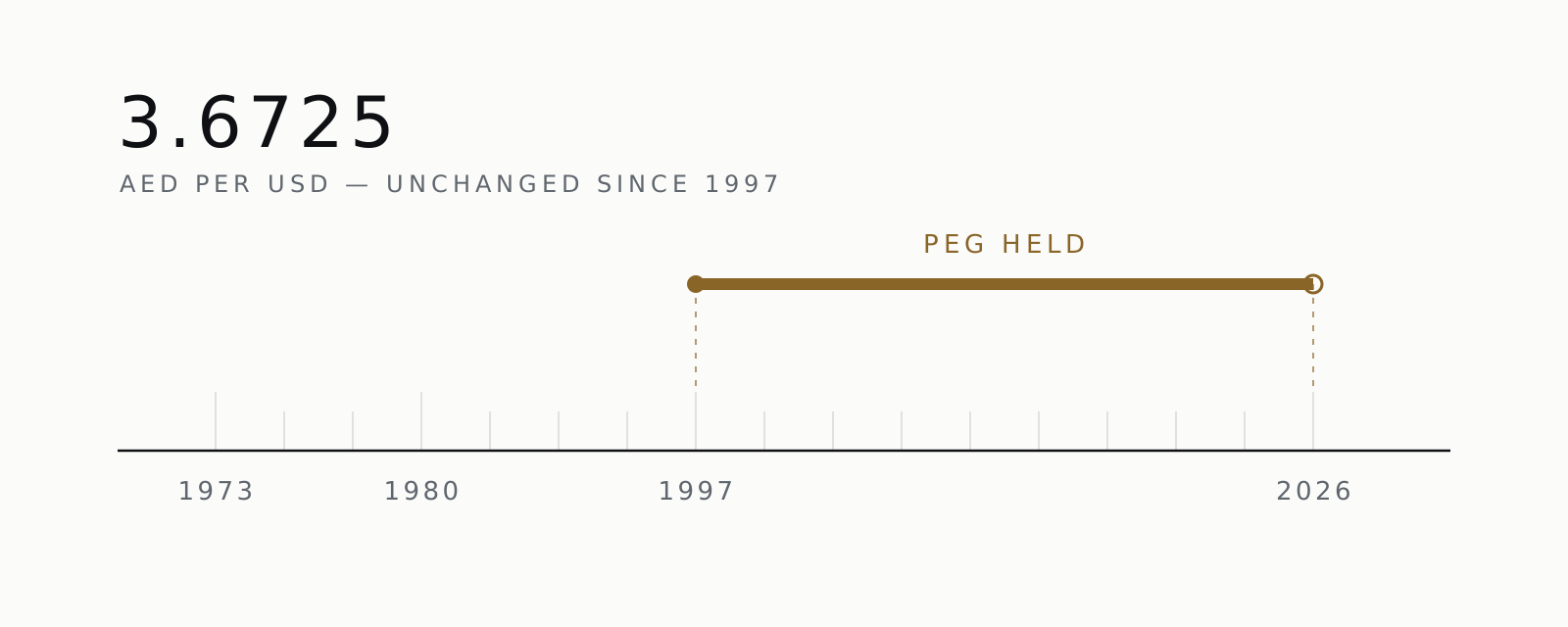
The AED peg: 3.6725 since 1997 and why it holds
The UAE dirham has been pegged to the US dollar at 3.6725 since 1997, and the link to the dollar is older still. The Central Bank defends the rate with foreign assets of about USD 295 billion, as of January 2026 — which is why USDT/AED trades settle against a constant, not a moving FX rate.
KEY FACTS
| Peg rate | AED 3.6725 per USD |
|---|---|
| In force since | 1997 (dollar-linked since 1980) |
| CBUAE foreign assets | AED 1.084 trillion (~USD 295bn), end-January 2026 |
| Official FX reserves | ~USD 215 billion (CBUAE) |
| Practical effect | 1 USDT ≈ 3.6725 AED before any spread |
Source: Central Bank of the UAE; WAM, as of September 2026.
What is the AED peg?
The AED peg is the Central Bank of the UAE's standing commitment to exchange dirhams for US dollars at a fixed rate of 3.6725. The rate has not moved since 1997. For a crypto trade it means the exchange side of the price is a constant — the USDT/AED rate barely moves — and the only variable left is the provider's spread.
Mechanically, the peg is a two-way offer: the Central Bank buys and sells dollars at 3.6725, and every bank in the country prices off that anchor. It turns any dirham amount into a dollar amount divided by 3.6725, with no FX risk in between.
That is why this page matters to a crypto client. A USDT-to-AED conversion is not really an FX trade; it is a stablecoin trade settled in a currency hard-linked to the coin's own anchor — the one leg that has moved historically is USDT's own dollar peg, and only briefly.
How long has the dirham been pegged, and at what rates?
The UAE dirham was introduced on 19 May 1973 and has been tied to the US dollar for almost its entire existence. A brief link to the IMF's SDR basket in the late 1970s ended by 1980, and the formal peg at 3.6725 dates from 1997.
| Year | What happened | Rate vs USD |
|---|---|---|
| 1973 | Dirham introduced on 19 May, replacing the Qatar–Dubai riyal | Dollar-linked from day one |
| 1978 | Brief link to the IMF's SDR basket | Managed float |
| 1980 | Return to a de facto US-dollar link | Around 3.67 |
| 1997 | Formal peg set by the Central Bank | 3.6725 |
| 2026 | Unchanged | 3.6725 |
The number in the right-hand column has been the same for 29 years — no band, no crawl, no adjustment.
The 1997 decision did not move the market rate; it formalised the level the dirham already traded at. According to the IMF's exchange-arrangement database (AREAER), the UAE runs a conventional peg — a single fixed rate defended by reserves, not a managed band.
Why has the peg held since 1997?
The dirham peg holds because the Central Bank of the UAE can afford to defend it and sees no reason to abandon it. Foreign assets stood at AED 1.084 trillion — about USD 295 billion — at the end of January 2026, according to official data.
- Reserves: official FX reserves of around USD 215 billion, with total foreign assets near USD 295 billion as of January 2026.
- Export currency: oil and gas are priced and settled in dollars, so export revenue arrives in the anchor currency and the peg costs little to run.
- Surpluses: persistent current-account surpluses keep feeding the reserve stock, with sovereign funds such as ADIA behind the central bank.
- Rate symmetry: CBUAE policy rates follow the US Federal Reserve, so there is no interest differential for speculators to attack.
- Track record: 29 years without a move, through the 2008 crisis, the 2015 oil crash and 2020.
The hardest test came in 2015–2016, when Brent crude fell below USD 30 a barrel and forward markets priced de-pegs across the Gulf. The dirham did not move — the reserves were simply larger than the bet.
Why does the peg matter for crypto settlement in the UAE?
For crypto settlement in the UAE, the peg removes the exchange-rate variable from the trade entirely. USDT is designed to track the dollar and the dirham is fixed to the dollar at 3.6725, so 1 USDT is 3.6725 AED before any margin — and a dirham payment token would be worth the same at the peg.
Practically, that means no FX slippage between the quote and the bank wire. A desk quotes one all-in spread — ours is 0.08% to 0.40% by ticket size, on the published pricing bands — and the AED leg lands the same business day by UAEFTS, once the onboarding requirements are cleared.
Compare that with a floating-currency corridor, where the rate can move between trade and settlement and someone absorbs the difference. The full walkthrough of a bank-settled trade is in our guide to selling USDT in Dubai with same-day settlement; a licensed desk pays only to an account in your own name, and our VARA licence details are on the main page.
What would happen if the peg broke?
This section is a thought experiment, not a forecast. As of September 2026 the Central Bank of the UAE has announced no change, and its reserve position points the other way.
If the peg broke, every USDT/AED quote would reprice overnight. A trade already agreed in AED would still settle in AED, but the dollar value of those dirhams would move — up in a revaluation, down in a devaluation — and hedging costs would appear in a market that has never needed them.
There is one regional precedent: Kuwait moved the dinar from a pure dollar peg to a currency basket in May 2007, a revaluation made from strength. The scenarios that worry traders are forced devaluations, and those belong to countries that run out of reserves — the opposite of the UAE's position.
The practical takeaway is about timing, not prediction. If the peg is ever changed it will be a policy decision published by the CBUAE; until then, the number to plan around is 3.6725.
The bottom line on the AED peg
The dirham's dollar peg is 29 years old, defended by roughly USD 295 billion in foreign assets and by an export economy that earns in dollars. For USDT settlement in the UAE it turns an FX question into arithmetic: the rate is fixed, so compare spreads. If that ever changes, you will read it on the CBUAE's own pages first.
FAQ
Has the UAE dirham ever de-pegged from the US dollar?
No. The dirham has been fixed at 3.6725 per dollar since 1997 and dollar-linked since 1980, with no devaluation or revaluation in between. The oil crashes of 2015 and 2020 left the rate untouched.
What backs the AED peg?
Central Bank of the UAE foreign assets of AED 1.084 trillion (about USD 295 billion) as of end-January 2026, official reserves of around USD 215 billion, dollar-denominated oil exports and persistent trade surpluses.
Does the peg mean the USDT/AED rate never changes?
The underlying rate is constant: 1 USDT ≈ 3.6725 AED, because both sides anchor to the dollar. What changes between providers is the spread charged on top, and USDT itself can drift from the dollar briefly under stress.
Could the UAE drop the peg in future?
Nothing is announced, and the Central Bank of the UAE treats the peg as a cornerstone of monetary policy. Kuwait moved to a currency basket in 2007, so regional precedent exists — but as of September 2026 any scenario is hypothetical.
Settle against a constant rate
Meridian OTC is a VARA-licensed Broker-Dealer in Dubai (VL/24/03/017). All-in spread 0.08–0.40% by size, from around 100,000 USDT. AED by UAEFTS the same business day once your account is approved, USD by SWIFT in 2–5 days — always to your own account.
SOURCES
- Central Bank of the UAE — Reserve management (peg and official reserves), accessed 10 September 2026.
- WAM via ZAWYA — CBUAE foreign assets, January 2026, accessed 10 September 2026.
- IMF — Annual Report on Exchange Arrangements and Exchange Restrictions (AREAER), exchange-arrangement classification, accessed 10 September 2026.
This guide is informational and is not legal, tax or investment advice, nor an invitation to buy or sell any virtual asset. Rules and figures are as of September 2026 — re-check the sources before acting. Virtual assets may lose their value in full or in part and are subject to extreme volatility.