
Selling crypto on a schedule: setting up a recurring OTC program
A recurring selling program is a standing arrangement with a licensed OTC desk: you sell a fixed amount of crypto on fixed dates, at pre-agreed terms, and every tranche settles to your own bank account with full paperwork. Here is how to set one up in Dubai, what it costs and what your bank sees.
KEY FACTS
| Structure | Standing instruction: fixed dates, fixed amounts |
|---|---|
| Typical desk minimum | From around 100,000 USDT per tranche |
| Meridian spread | 0.08%–0.40%, by tranche size |
| AED settlement | Same business day (UAEFTS) |
| USD settlement | 2–5 business days (SWIFT) |
| Paperwork | Trade confirmation per tranche, monthly statement |
Source: Meridian OTC published pricing bands and dealing practice, as of September 2026.
What is a recurring selling program?
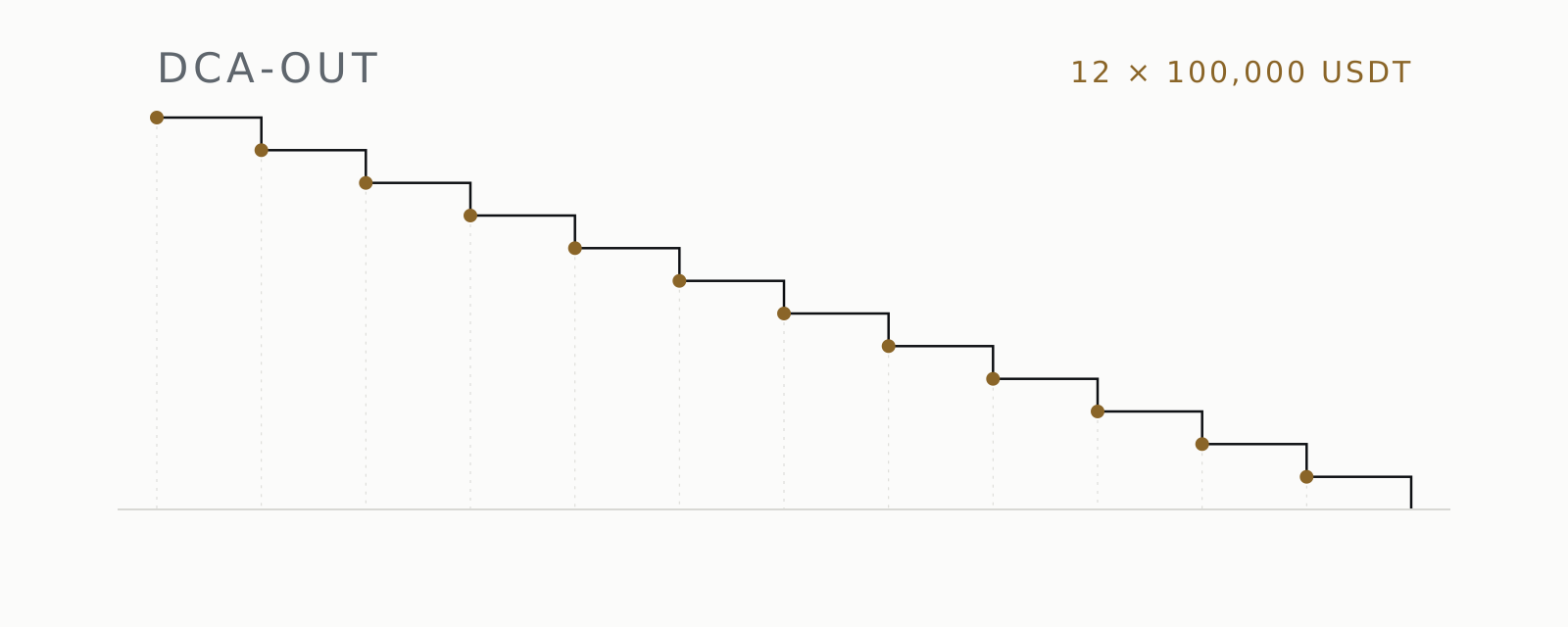
A recurring selling program is a standing instruction with an OTC desk to sell a set amount of virtual assets at set intervals — weekly, monthly or quarterly — under terms agreed in writing before the first trade. Traders call the pattern DCA-out: dollar-cost averaging in reverse, applied to leaving a position rather than building one. Each tranche settles exactly like a single bank-settled OTC trade: written quote, transfer, wire.
The desk holds your schedule, pricing formula and settlement instructions on file. You fund each tranche before its value date; the desk executes and pays out the same way every time. Nothing about the arrangement is exotic — it is one trade, repeated with the paperwork already done.
Who uses a scheduled exit?
A scheduled exit suits anyone converting a large position into regular fiat income rather than a single lump sum. The desk sees four recurring profiles:
- Founders and early investors unwinding a token position over quarters, not days.
- Companies paying salaries and rent from a crypto treasury.
- Property buyers accumulating dirhams toward a purchase date.
- Family offices paying regular distributions from a digital-asset allocation.
A schedule is not a tool for timing the market. If your decision is "sell everything today", a single ticket is simpler and one spread cheaper. If the position is below roughly 100,000 USDT in total, the wider routes in cashing out crypto in Dubai legally will serve you better than a desk program.
How do you set up a recurring program with a desk?
Setting up a recurring program takes one onboarding and one document: you approve an account, agree the schedule in writing — dates, amounts, pricing formula, settlement account — and fund each tranche before its value date. The account work happens once; the schedule then runs with a short confirmation per tranche.
-
STEP 1
Open the account before the first date
Individuals register with a passport and proof of address issued within 90 days; companies add the trade licence and ownership documents. Approval takes one business day in most cases — the document list is in our onboarding section. Do this before the schedule starts, not on the first value date.
-
STEP 2
Agree the schedule in writing
Fix the dates (the first business day of the month, not the first calendar day), the amounts, and the pricing rule: the desk's spread band for the tranche size on the day, quoted at an agreed time and held for a defined window. A schedule that lives in a chat thread is not a schedule.
-
STEP 3
Set the funding rule
You send each tranche in USDT — TRC20 is the common, cheapest rail in the UAE; ERC20 works too — before the agreed cut-off on the value date. The desk does not need to hold your remaining position; only the tranche due moves.
-
STEP 4
Confirm each fill and file it
After execution you receive a trade confirmation with the date, amount, rate and spread. AED arrives by UAEFTS the same business day; USD goes by SWIFT and takes 2 to 5 business days. File every confirmation — they are the program's paper trail.
What does a scheduled sale cost?
A scheduled sale costs the same as a single sale of the same size: the desk's all-in spread on the USDT/AED rate. The dirham has been pegged to the US dollar at 3.6725 since 1997 and USDT tracks the dollar, so the only real variable is the spread — ours is published at 0.08% to 0.40% by ticket size in the pricing section, and the peg arithmetic is covered in why the USDT/AED rate sits at 3.67.
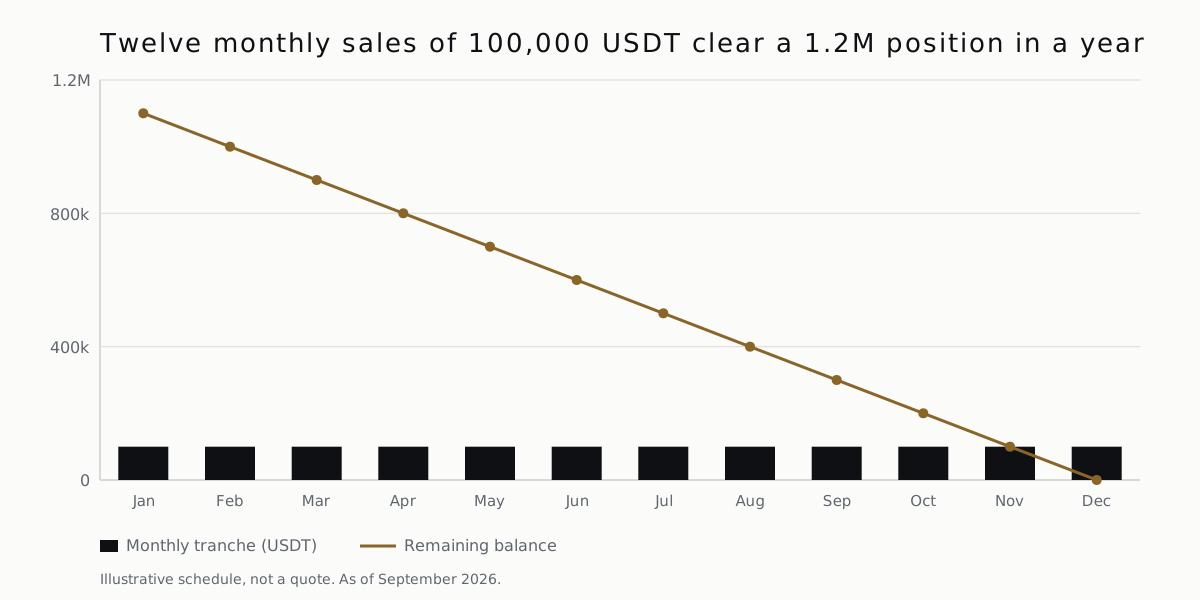
Worked example: a 100,000 USDT monthly tranche converts to AED 367,250 gross. Across the published band the spread costs between AED 294 and AED 1,469 per tranche, as of September 2026.
| Spread | Cost per tranche (AED) | Twelve tranches (AED) |
|---|---|---|
| 0.08% | 294 | 3,526 |
| 0.20% | 734.50 | 8,814 |
| 0.40% | 1,469 | 17,628 |
Even at the top of the band, the full-year cost of exiting 1.2M USDT stays under AED 18,000 — the band matters more than the schedule.
How do dates, cut-offs and settlement work?
Recurring settlements follow UAE business days: dealing runs Sunday to Thursday, 09:00–18:00 GST, and an AED wire goes out by UAEFTS the same business day the tranche trades. USD settlement uses SWIFT and lands in 2 to 5 business days. Pick value dates that survive public holidays — the first business day of the month, not the first calendar day.
Agree the funding cut-off in writing. A tranche funded after the cut-off rolls to the next business day, and your bank plan moves with it. Around Eid and National Day holidays, confirm the value date with the desk a week ahead rather than assuming the calendar.
What does your bank see, and what do you get on paper?
Your bank sees a repeating inbound wire from the same licensed counterparty into your own-name account — the cleanest pattern a compliance team can be asked to clear. Each tranche comes with a trade confirmation showing date, amount, rate and spread, and you can ask for a consolidated monthly statement covering the whole program.
A licensed desk pays only to an account in your own name, which is exactly what the bank wants to see. Meridian OTC is a VARA-licensed Broker-Dealer, licence VL/24/03/017, verifiable in VARA's public register and linked from the licence section of our main page.
Keep a source-of-funds file from day one: wallet history, trade confirmations, monthly statements. When the bank asks — and on a seven-figure annual flow it will ask — you answer with one folder of documents instead of a scramble.
What can go wrong with a fixed schedule?
The risks of a scheduled program are mechanical, not legal:
- Price drift between tranches. A schedule removes timing decisions, not market risk — a falling asset still falls.
- A missed funding cut-off. The tranche rolls a day, and so does your wire.
- Amounts creeping up without notice. Larger tranches can need refreshed source-of-funds before they clear.
- Stale KYC. An expired proof of address pauses the program — renew documents before they lapse.
- Silent changes. Every amendment belongs in writing; a messenger "same as last time but double" is how errors start.
The bottom line on selling crypto on a schedule
A recurring OTC program turns a large exit into an administrative routine: fixed dates, agreed pricing, same-day AED and a paper trail your bank can read. Open the account first, put the schedule in writing, and judge the desk on its licence and its paperwork — not on promises about price.
FAQ
Can I change the amount or skip a date once the program is running?
Yes — a schedule is a standing instruction, not a lock-in. Give the desk written notice before the value date; changes made inside the quote window can reprice that tranche. Skips and pauses are normal.
What is the minimum size for each scheduled sale?
Most licensed desks in Dubai start around 100,000 USDT per tranche. Below that size a regulated exchange is usually the cheaper route for a recurring exit, and the schedule matters less than the fees.
Does a fixed schedule get a better rate?
No. The spread follows tranche size within the desk's published bands, not loyalty or frequency. What a schedule buys is operational simplicity and a consistent paper trail — not a discount.
Will recurring wires from a crypto desk trigger a bank review?
Banks can review any inbound flow. Repeating wires from one licensed counterparty, each matched by a trade confirmation, are the easiest pattern to clear — keep your confirmations and statements in one file and answer queries with documents, not explanations.
Set up a recurring selling program
Meridian OTC is a VARA-licensed Broker-Dealer in Dubai. All-in spread 0.08–0.40% by size, published openly. Fixed dates, written terms, AED by UAEFTS the same business day once your account is approved.
SOURCES
- VARA public register — licence status check, accessed 10 September 2026.
- Central Bank of the UAE — payment systems (UAEFTS), accessed 10 September 2026.
- Meridian OTC published pricing bands and onboarding requirements — Meridian OTC published pricing bands, September 2026.
This guide is informational and is not legal, tax or investment advice, nor an invitation to buy or sell any virtual asset. Rules and figures are as of September 2026 — re-check the sources before acting. Virtual assets may lose their value in full or in part and are subject to extreme volatility.